






 Trang Chủ
 Các sản phẩm


29+ years in pharmaceutical machinery, covering capsule filling, tablet pressing, blister packaging, tablet and capsule counting, cartoning, GMP production, and overseas machine service.

Bạn có được khả năng kiểm soát chính xác lực nén và các thông số quy trình bằng máy dập viên quay cho các vấn đề về tính dẻo của vật liệu.
|
Đặc điểm |
Mô tả |
|
Kiểm soát trọng lượng chính xác |
Trọng lượng viên đồng đều giúp giảm sự biến thiên. |
|
Kết cấu chắc chắn |
Vật liệu bền bỉ đảm bảo độ tin cậy. |

Khi bạn vận hành một máy nén viên quay cho các vấn đề về tính dẻo của vật liệu, bạn thường gặp phải một số thách thức lặp lại. Những vấn đề này có thể làm gián đoạn sản xuất và ảnh hưởng đến chất lượng viên nếu không được xử lý kịp thời. Bảng dưới đây tóm tắt các thách thức phổ biến nhất và nguyên nhân điển hình của chúng:
|
Thách thức |
Nguyên nhân phổ biến |
|
Dính (dính chày) |
Độ ẩm dư thừa, sấy hạt không đồng đều, bôi trơn không đủ, tỷ lệ bột mịn cao, dụng cụ bị mài mòn, độ ẩm môi trường cao. |
|
Tách lớp (phân lớp) |
Lực nén sơ bộ quá mức, đặc tính vật liệu không tương thích. |
|
Nhiễm chéo |
Quản lý bụi không đầy đủ dẫn đến bột chuyển giữa các lớp. |
|
Trọng lượng lớp không chính xác |
Đặc tính chảy của vật liệu kém, vấn đề với hệ thống cấp liệu kép. |
|
Bong nắp/Độ cứng không đủ |
Không khí bị giữ lại, quá trình nén cuối cùng được tối ưu hóa kém. |
Bạn cũng có thể gặp các lỗi vận hành dẫn đến những vấn đề này. Ví dụ:
1. Bong nắp có thể do không khí bị giữ lại hoặc độ ẩm thấp. Bạn có thể ngăn chặn điều này bằng cách tối ưu hóa các thông số nén và duy trì mức độ ẩm phù hợp.
2. Tách lớp thường xảy ra do không khí bị giữ lại hoặc chất kết dính yếu. Cải thiện kỹ thuật tạo hạt và chất lượng chất kết dính giúp tránh vấn đề này.
3. Dính bột có thể phát sinh do bôi trơn quá mức hoặc đánh bóng chày không đúng cách. Điều chỉnh việc bôi trơn và duy trì bề mặt chày có thể giải quyết vấn đề này.
4. Dính thường do bôi trơn không đủ hoặc độ ẩm cao. Đảm bảo bôi trơn đúng cách và kiểm soát điều kiện môi trường là các giải pháp hiệu quả.
5. Mẻ cạnh là kết quả của nồng độ chất kết dính thấp hoặc độ bền hạt yếu. Tăng nồng độ chất kết dính và cải thiện độ bền hạt có thể ngăn chặn vấn đề này.
6. Mẹo: Phân bố kích thước hạt đồng đều giúp cải thiện quá trình trộn và ngăn phân lớp bột, từ đó giảm sự khác biệt về trọng lượng viên.
Bạn có thể dựa vào các cơ chế tiên tiến trong máy dập viên quay cho các vấn đề về tính dẻo của vật liệu. Những máy này cung cấp khả năng giám sát độ chặt của chày theo thời gian thực, tự động tắt hệ thống khi xảy ra sai lệch. Hệ thống bôi trơn tự động cấp thực phẩm đảm bảo việc bôi trơn đồng nhất, trong khi các mô-đun phun magiê stearat tùy chọn cung cấp khả năng bôi trơn chính xác cho vật liệu dễ dính. Lớp phủ dụng cụ có thể tùy chỉnh giúp bạn xử lý các đặc tính dính cụ thể.
Cảm biến và hệ thống phản hồi đóng vai trò quan trọng trong việc quản lý tính dẻo của vật liệu. Bảng dưới đây nêu bật cách các tính năng này đóng góp vào khả năng kiểm soát tốt hơn:
|
Tính năng |
Đóng góp vào tính dẻo của vật liệu |
|
Cảm biến lực nén |
Theo dõi và điều chỉnh lực nén theo thời gian thực, đảm bảo trọng lượng viên và chất lượng đồng nhất. |
|
Con lăn tiền nén |
Loại bỏ không khí giữa bột và khuôn, nâng cao tính dẻo và chất lượng của bột viên. |
Bạn cũng có thể hưởng lợi từ việc lập hồ sơ nhiệt độ chiến lược và kiểm soát quy trình thống kê. Những phương pháp này cho phép bạn tối ưu hóa các thông số một cách có hệ thống và thiết lập các khoảng vận hành ổn định. Nhờ đó, bạn giảm thiểu sự hình thành lỗ rỗng và nâng cao chất lượng sản phẩm.
Khi bạn sử dụng máy dập viên xoay để xử lý các vấn đề về tính dẻo của vật liệu, bạn tác động trực tiếp đến cả chất lượng viên và hiệu quả sản xuất. Việc kiểm soát tính dẻo của vật liệu hiệu quả cải thiện sự kết tụ của các hạt, tạo ra kích thước viên đồng nhất và ít khuyết tật hơn. Bảng dưới đây minh họa tác động đến hiệu suất và tỷ lệ loại bỏ theo lô:
|
Khía cạnh |
Tác động đến hiệu quả sản xuất |
Tác động đến tỷ lệ loại bỏ theo lô |
|
Tính dẻo cao hơn |
Cải thiện sự kết tụ của các hạt, dẫn đến kích thước viên đồng nhất |
Giảm khuyết tật, do đó làm giảm tỷ lệ loại bỏ |
|
Biến dạng dẻo được tối ưu hóa |
Giảm thiểu sự vỡ trong quá trình xử lý |
Giảm sự tạo thành hạt mịn và tỷ lệ tái xử lý |
|
Kiểm soát tính dẻo phù hợp |
Nâng cao năng suất và giảm các phần có kích thước không phù hợp |
Tăng tính đồng nhất của sản phẩm, giảm số lượng loại bỏ |
Bạn sẽ nhận thấy rằng việc kiểm soát tính dẻo phù hợp giúp nâng cao năng suất và giảm các phần có kích thước không phù hợp. Điều này dẫn đến tính đồng nhất của sản phẩm cao hơn và ít lô bị loại bỏ hơn. Sự phân bố kích thước hạt đồng đều cũng đóng vai trò quan trọng. Các hạt nhỏ hơn làm tăng diện tích liên kết và độ bền, giúp tăng độ bền kéo của viên nén. Độ lệch chuẩn nhỏ trong kích thước hạt đảm bảo quá trình nạp đầy đồng nhất trong khi nén, giảm sự khác biệt về trọng lượng và cải thiện tính nhất quán.
Lưu ý: Bằng cách tập trung vào các khía cạnh này, bạn có thể đạt được năng suất cao hơn, giảm chất thải và duy trì chất lượng viên ổn định trong suốt các chu kỳ sản xuất.
Bạn có thể đạt được kết quả tối ưu bằng cách điều chỉnh lực nén và cài đặt máy trên máy dập viên xoay để xử lý các vấn đề về tính dẻo của vật liệu. Vật liệu có tính dẻo cao cần thời gian lưu lâu hơn, cho phép các hạt biến dạng và liên kết hiệu quả. Thời gian lưu ngắn hơn phù hợp với vật liệu có khả năng nén cao, ngăn ngừa việc nén quá mức và duy trì tính toàn vẹn của viên. Bạn cũng nên tối ưu hóa lực tiền nén để cải thiện sự sắp xếp lại của các hạt, giúp giảm lực nén chính cần thiết và nâng cao chất lượng viên.
Mẹo: Điều chỉnh thời gian lưu và cài đặt tiền nén giúp bạn tùy chỉnh quy trình nén theo các đặc tính tính dẻo cụ thể của công thức.
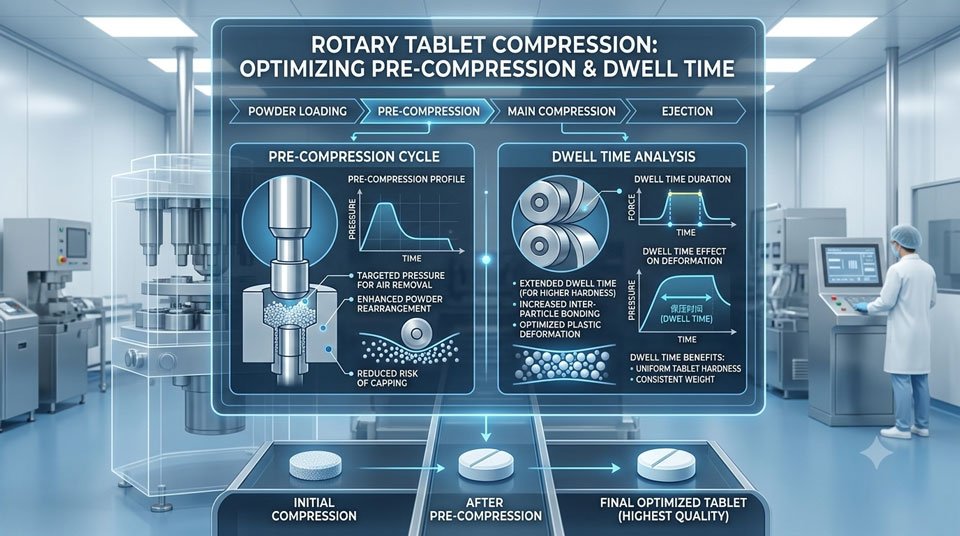
Việc lựa chọn bộ dụng cụ phù hợp và bảo trì thường xuyên đảm bảo chất lượng viên ổn định khi sử dụng máy dập viên xoay để xử lý các vấn đề về tính dẻo của vật liệu. Bạn nên làm sạch bộ dụng cụ sau mỗi lô để loại bỏ cặn bám và ngăn ngừa hiện tượng dính. Việc đánh giá thường xuyên tình trạng mài mòn và hư hỏng giúp bộ dụng cụ luôn ở điều kiện tối ưu. Sử dụng chất bôi trơn phù hợp giúp ngăn ngừa sự kẹt dính và giảm ma sát.
Bạn có thể tối ưu hóa thiết kế viên để giảm hiện tượng dính và bong tróc. Việc điều chỉnh các thông số kỹ thuật của bộ dụng cụ, chẳng hạn như độ sâu cốc và biên dạng, giúp giảm diện tích tiếp xúc với công thức. Duy trì tình trạng bộ dụng cụ phù hợp, bao gồm vệ sinh và kiểm tra thường xuyên, hỗ trợ sản xuất ổn định.
1.Tránh các biên dạng cốc sâu; chọn thiết kế nông hoặc phẳng.
2.Sử dụng kiểu phông chữ đơn giản cho việc dập nổi để giảm nguy cơ dính bột.
3.Áp dụng các kỹ thuật tạo độ côn trong thiết kế dụng cụ để tạo điều kiện giải phóng bột.
Các lớp phủ chuyên dụng như PTFEgiúp giảm sự bám dính trong quá trình nén viên, điều này rất quan trọng khi xử lý các vật liệu dính. Bề mặt được đánh bóng kỹ làm giảm độ nhám, giảm khả năng vật liệu bám vào dụng cụ. Các lớp phủ ma sát thấp tiên tiến giúp cải thiện hơn nữa hiệu suất của dụng cụ khi gia công nhiều loại vật liệu, bao gồm cả nhựa.
|
Nguyên nhân gây lỗi |
Biện pháp khắc phục |
|
Chày cối bị mòn hoặc thô ráp làm tăng ma sát |
Kiểm tra và đánh bóng chày, cối thường xuyên |
|
Dính vào bề mặt chày |
Tối ưu hóa cài đặt đẩy viên; cối dạng côn giúp giảm ứng suất |
|
Chày lõm sâu tập trung ứng suất |
Điều chỉnh tốc độ nén và lực nén sơ bộ |
Lưu ý: Việc bảo trì dụng cụ nhất quán và sử dụng các lớp phủ chuyên dụng giúp bạn giảm thiểu hiện tượng dính, bám dính bột và ma sát, đảm bảo viên nén chất lượng cao.
Bạn có thể cải thiện tính dẻo của vật liệu bằng cách điều chỉnh quy trình và thay đổi công thức. Việc lựa chọn đúng loại chất dính và tá dược giúp cải thiện khả năng nén và đặc tính chảy. Các chất dính tự nhiên như Starch 1500, gôm Acacia và Gelatin mang lại khả năng tương thích sinh học và hiệu quả chi phí. Các chất dính bán tổng hợp, như dẫn xuất cellulose, cung cấp chất lượng ổn định và nhất quán. Các chất dính tổng hợp như Povidone và Polyethylene glycol mang lại khả năng liên kết và độ hòa tan tuyệt vời. Các chất dính dùng cho nén trực tiếp, bao gồm Cellulose vi tinh thể và Dicalcium phosphate, đảm bảo khả năng nén và độ chảy tuyệt vời.
|
Loại chất dính |
Ví dụ |
Cách sử dụng điển hình |
Đặc điểm chính |
|
Chất dính tự nhiên |
Starch 1500, gôm Acacia, Gelatin |
Tạo hạt ướt, nén trực tiếp |
Giá rẻ, tương thích sinh học, chất lượng thay đổi |
|
Chất dính bán tổng hợp |
Các dẫn xuất cellulose (HPMC) |
Tạo hạt ướt, nén trực tiếp |
Chất lượng ổn định, nhất quán, độ hòa tan có thể điều chỉnh |
|
Chất dính tổng hợp |
Povidone (PVP), PEG |
Tạo hạt ướt |
Khả năng liên kết tuyệt vời, độ hòa tan tốt, trơ với các API |
|
Chất dính cho nén trực tiếp |
MCC, Starch 1500, DCP |
Nén trực tiếp |
Khả năng nén tuyệt vời, đặc tính chảy tốt |
Bạn cũng có thể thay đổi kỹ thuật tạo hạt, điều chỉnh mức độ ẩm và tối ưu hóa sự phân bố kích thước hạt. Những điều chỉnh này giúp bạn đạt được sự trộn đồng nhất, giảm hiện tượng phân lớp bột và tăng cường độ bền của viên nén.
Điểm nhấn: Việc lựa chọn đúng tá dược và điều chỉnh các thông số quy trình trực tiếp cải thiện tính dẻo và giảm lỗi trong viên nén của bạn.

Bạn có thể áp dụng các giải pháp và điều chỉnh này vào các tình huống thực tế để đạt kết quả tốt hơn. Ví dụ, bạn có thể gặp vấn đề dính với các vật liệu có tính dẻo cao. Làm sạch dụng cụ sau mỗi mẻ và phủ lớp PTFE có thể giải quyết vấn đề này. Điều chỉnh thời gian lưu và lực nén sơ bộ giúp bạn kiểm soát các vật liệu cần biến dạng hạt nhiều hơn.
Bạn có thể tối ưu hóa thiết kế viên nén bằng cách lựa chọn biên dạng cốc nông và các kiểu dập nổi đơn giản. Những lựa chọn này làm giảm nguy cơ dính và kẹt khi lấy viên. Việc bảo trì dụng cụ định kỳ, bao gồm kiểm tra và đánh bóng, đảm bảo chất lượng viên nén ổn định và giảm ma sát.
Bạn cũng có thể cải thiện công thức bằng cách lựa chọn các chất kết dính dùng cho phương pháp nén trực tiếp như cellulose vi tinh thể. Tá dược này cải thiện khả năng nén và độ chảy, tạo ra các viên nén đồng đều. Việc điều chỉnh kỹ thuật tạo hạt và mức độ ẩm tiếp tục hỗ trợ quá trình sản xuất ổn định.
Bạn có thể đạt được các viên nén chất lượng cao, không có khuyết tật bằng cách áp dụng những phương pháp tốt nhất này với máy dập viên quay của bạn để xử lý các vấn đề về tính dẻo của vật liệu.
Bạn có được các giải pháp mục tiêu cho tính dẻo của vật liệu với máy dập viên quay.
|
Yếu tố |
Ảnh hưởng đến tỷ lệ khuyết tật và chất lượng |
|
Ổn định hóa quá trình nén |
Ít khuyết tật hơn, khối lượng và độ cứng viên nén đồng nhất |
|
Giám sát thông minh |
Điều chỉnh nhanh hơn, vận hành ổn định, hiệu suất cao hơn |
Việc đánh giá quy trình thường xuyên giúp bạn duy trì các tiêu chuẩn cao và giảm thiểu khuyết tật.
Bạn mô tả tính dẻo của vật liệu là khả năng các hạt bột biến dạng và liên kết dưới áp lực. Đặc tính này ảnh hưởng trực tiếp đến độ bền và chất lượng viên nén.
Bạn làm sạch và đánh bóng dụng cụ thường xuyên. Bạn áp dụng các lớp phủ chuyên dụng và điều chỉnh chất bôi trơn. Những bước này giúp ngăn ngừa hiện tượng dính và đảm bảo việc đẩy viên ra trơn tru.
Bạn theo dõi lực nén để duy trì khối lượng và độ cứng viên nén đồng nhất. Việc điều chỉnh theo thời gian thực giúp bạn giảm khuyết tật và cải thiện hiệu suất sản xuất tổng thể.
Tài liệu tham khảo
1. "Việc duy trì phân bố kích thước hạt đồng nhất rất quan trọng đối với quá trình nạp khuôn đồng đều, một nguyên tắc được nhấn mạnh rộng rãi bởi Powder & Bulk Solids các chuyên gia."
2. "Như được nêu bật trong các báo cáo sản xuất gần đây về Pharmaceutical Technology, các máy dập quay tiên tiến giúp tăng đáng kể sản lượng đồng thời giảm tỷ lệ loại bỏ."
3. "Việc triển khai giám sát nén theo thời gian thực phù hợp với hướng dẫn của FDA về công nghệ phân tích quy trình (PAT) trong sản xuất dạng bào chế rắn."
4. "Việc tuân thủ ISPE Good Practice Guides đảm bảo rằng hiệu chuẩn máy móc, kiểm tra dụng cụ và quy trình vệ sinh đáp ứng các yêu cầu nghiêm ngặt của cơ quan quản lý."

29+ years in pharmaceutical machinery, covering capsule filling, tablet pressing, blister packaging, tablet and capsule counting, cartoning, GMP production, and overseas machine service.

E-mail : manager@richpacking.cn
Building D, No. 226, Beishan Qiaotou Street, Haizhu District, Guangzhou City, Guangdong Province, China


 Mạng IPv6 được hỗ trợ