






 Trang Chủ
 Các sản phẩm
29+ years in pharmaceutical machinery, covering capsule filling, tablet pressing, blister packaging, tablet and capsule counting, cartoning, GMP production, and overseas machine service.

Trong ngành đóng gói dược phẩm, vật liệu máy móc không chỉ đơn thuần là vấn đề thiết kế thiết bị. Chúng có thể ảnh hưởng trực tiếp đến việc tuân thủ quy định, an toàn sản phẩm và hiệu suất lâu dài.
Các vật liệu thông dụng như thép không gỉ 304, thép không gỉ 316/316L, hợp kim nhôm và PTFE đều có những đặc tính khác nhau và được sử dụng cho các bộ phận máy móc khác nhau. Nhưng việc lựa chọn vật liệu phù hợp chỉ là bước đầu tiên. Các nhà sản xuất cũng cần những phương pháp đáng tin cậy để xác minh rằng vật liệu thực sự được sử dụng phù hợp với cấp độ đã được chỉ định.
Vậy, ngoài việc chỉ kiểm tra chứng chỉ, cần kiểm tra những vật liệu này như thế nào? Bài viết này sẽ giải thích vai trò của các vật liệu máy móc thông dụng, các phương pháp kiểm tra thực tế và cách người mua có thể xác minh chất lượng vật liệu khi lựa chọn và kiểm tra máy đóng gói dược phẩm.
Việc lựa chọn vật liệu máy móc không chỉ đơn thuần là vấn đề làm cho máy đóng gói dược phẩm chắc chắn, bền bỉ hoặc đẹp mắt. Nó còn ảnh hưởng đến việc tuân thủ quy định, an toàn tiếp xúc với sản phẩm và độ tin cậy sản xuất lâu dài.
Một trong những lý do quan trọng nhất để chú ý đến vật liệu máy móc là việc tuân thủ quy định. Các nhà sản xuất dược phẩm hoạt động theo các luật, quy định khác nhau vàYêu cầu GMPtùy thuộc vào khu vực và thị trường mục tiêu của họ.
Ví dụ, ngành sản xuất dược phẩm tại Hoa Kỳ phải tuân thủ các yêu cầu CGMP của FDA, bao gồm các yêu cầu liên quan đến cấu tạo thiết bị và bề mặt tiếp xúc với sản phẩm. Tại Liên minh Châu Âu, các yêu cầu GMP được quy định trong EudraLex Tập 4, bao gồm các yêu cầu cụ thể về cơ sở vật chất và thiết bị.
Đặc biệt, đối với các bề mặt tiếp xúc trực tiếp với sản phẩm, các cơ quan quản lý đặc biệt quan tâm đến việc liệu vật liệu đó có thể:
Do đó, khi lựa chọn máy đóng gói dược phẩm, người mua không nên chỉ hỏi "Máy có làm bằng thép không gỉ không?". Những câu hỏi có ý nghĩa hơn là "Mỗi bộ phận quan trọng được làm bằng vật liệu gì, tại sao lại chọn vật liệu đó, và liệu nó có phù hợp với sản phẩm và các yêu cầu quy định của khu vực tôi không?".
Máy đóng gói dược phẩm thường bao gồm nhiều bộ phận khác nhau, và không phải tất cả đều cần được làm từ cùng một loại vật liệu. Việc lựa chọn vật liệu cần dựa trên sự tiếp xúc với sản phẩm, chức năng cơ học, môi trường hoạt động, nhiệt độ, ma sát và tiếp xúc với hóa chất.
Các thành phần tiếp xúc với sản phẩm
Đối với các bộ phận tiếp xúc trực tiếp với sản phẩm, vật liệu máy móc thường yêu cầu khả năng chống ăn mòn tốt, dễ làm sạch, tương thích hóa học và nguy cơ nhiễm bẩn thấp.
Các ví dụ điển hình bao gồm:
|
Máy móc |
Các thành phần tiếp xúc chính với sản phẩm |
|
Phễu chứa bột, đĩa định lượng, kênh dẫn bột, các bộ phận chuyển bột |
|
|
Phễu nạp liệu, bộ cấp liệu cưỡng bức, khuôn dập, chày đột, máng xả liệu |
|
|
Hệ thống cấp liệu, ray dẫn hướng |
|
|
Phễu chứa sản phẩm, rãnh rung, đường ray đếm, máng xả. |
Thép không gỉ 304 có thể phù hợp với nhiều ứng dụng thông thường, trong khi thép không gỉ 316/316L thường được lựa chọn khi cần khả năng chống ăn mòn cao hơn hoặc điều kiện tiếp xúc sản phẩm khắt khe hơn.
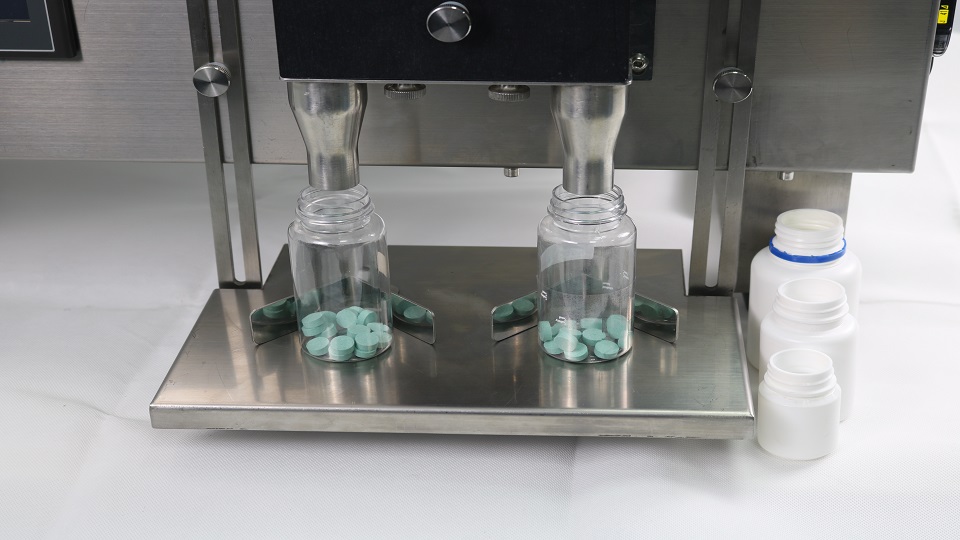
Máng xả liệu bằng thép không gỉ 316 của máy đếm để bàn Rich Packing.
Các thành phần cấu trúc không tiếp xúc với sản phẩm
Khung máy, vỏ ngoài, giá đỡ và các cấu trúc bảo vệ thường không tiếp xúc trực tiếp với sản phẩm dược phẩm. Việc lựa chọn vật liệu cho chúng có thể tập trung nhiều hơn vào độ bền cơ học, độ ổn định cấu trúc, trọng lượng, chi phí và hình thức. Nói chung, thép không gỉ 304 và hợp kim nhôm là những lựa chọn tốt.
Các linh kiện dành cho vật liệu đặc biệt hoặc đòi hỏi cao.
Một số sản phẩm tạo ra những thách thức bổ sung trong việc lựa chọn vật liệu máy móc. Bột dính, công thức ăn mòn, vật liệu mài mòn hoặc các sản phẩm nhạy cảm với sự nhiễm bẩn có thể yêu cầu sự kết hợp vật liệu hoặc xử lý bề mặt đặc biệt. Ví dụ, đối với các vật liệu dính trong quá trình đóng gói viên nang, que định lượng phủ PTFE được sử dụng để đảm bảo độ chính xác khi định lượng bột.
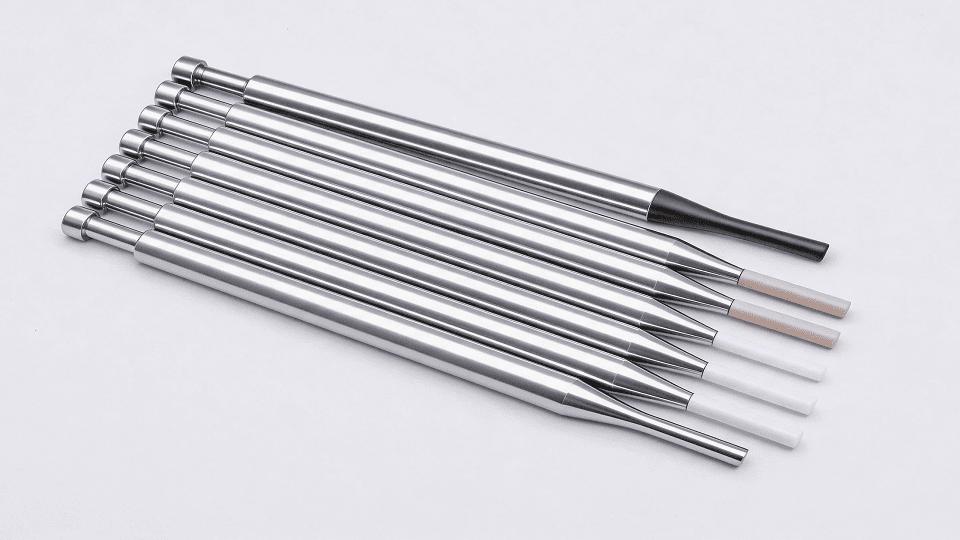
Que đóng gói tùy chỉnh của Rich Packing dành cho máy đóng viên nang
Các bộ phận máy móc khác nhau có yêu cầu vật liệu khác nhau tùy thuộc vào chức năng và sự tiếp xúc với các sản phẩm dược phẩm. Sau đây là bốn loại vật liệu thường được sử dụng cùng với các đặc điểm và ứng dụng chính của chúng.
Nhờ khả năng chống ăn mòn, độ bền cơ học và giá thành, thép không gỉ 304 là một trong những loại thép không gỉ được sử dụng rộng rãi nhất trong ngành công nghiệp chế tạo.máy móc dược phẩmKhả năng chống ăn mòn của nó làm cho nó phù hợp hơn nhiều cho các thiết bị dược phẩm so với thép carbon thông thường. Bề mặt nhẵn, dễ lau chùi của nó cũng có thể hỗ trợ thiết kế thiết bị hợp vệ sinh.
Trong máy đóng gói dược phẩm, thép không gỉ 304 thường được sử dụng cho khung máy, vỏ ngoài, nắp bảo vệ, các bộ phận vận chuyển và một số bộ phận tiếp xúc trực tiếp với sản phẩm, nơi điều kiện hoạt động không yêu cầu khả năng chống ăn mòn bổ sung của thép 316/316L.
Tuy nhiên, không nên tự động coi thép không gỉ 304 là vật liệu tốt nhất cho mọi ứng dụng tiếp xúc với sản phẩm. Một số vật liệu dược phẩm, chất tẩy rửa hoặc môi trường nhất định có thể đòi hỏi khả năng chống ăn mòn khắt khe hơn. Trong những trường hợp như vậy, thép không gỉ 316/316L có thể là lựa chọn phù hợp hơn.
Thép không gỉ 316/316L thường được lựa chọn khi yêu cầu khả năng chống ăn mòn cao hơn. Sự hiện diện của molypden (Mo) trong hợp kim tạo nên sự khác biệt so với thép 304. Molypden góp phần cải thiện khả năng chống ăn mòn trong một số môi trường ăn mòn nhất định, đó là một trong những lý do tại sao thép không gỉ dòng 316 thường được xem xét cho các ứng dụng tiếp xúc sản phẩm đòi hỏi khắt khe.
Sự khác biệt giữa 316 và 316L cũng rất quan trọng. Chữ "L" biểu thị hàm lượng carbon thấp hơn. Điều này đặc biệt quan trọng đối với các bộ phận hàn vì hàm lượng carbon thấp hơn có thể giảm nguy cơ ăn mòn do quá trình hàn. Vì lý do này, một máy móc có thể sử dụng 316L cho bộ phận tiếp xúc trực tiếp với sản phẩm ngay cả khi các bộ phận kết cấu không tiếp xúc khác sử dụng 304.
Hợp kim nhôm chủ yếu có giá trị trong máy đóng gói dược phẩm do trọng lượng nhẹ và tỷ lệ độ bền trên trọng lượng tốt. Nó có thể được tìm thấy trong khung máy, cấu trúc bảo vệ, một số bộ phận chuyển động và các mô-đun máy móc nhẹ.
So với thép không gỉ, nhôm có thể giảm đáng kể trọng lượng của một bộ phận máy móc. Điều này đặc biệt hữu ích cho các thiết bị dạng mô-đun, cơ cấu chuyển động, cấu trúc điều chỉnh và các loại máy móc mà việc lắp đặt hoặc di chuyển dễ dàng là rất quan trọng.
Tuy nhiên, hợp kim nhôm không nên được sử dụng để thay thế hoàn toàn thép không gỉ trong mọi trường hợp. Nhìn chung, nó hữu ích hơn cho các cấu kiện kết cấu và các bộ phận nhẹ hơn là lựa chọn phổ biến cho các bề mặt tiếp xúc với sản phẩm.
PTFE, hay polytetrafluoroethylene, là một loại fluoropolymer kỹ thuật có các đặc tính giúp nó hữu ích cho các bộ phận cụ thể hơn là các bộ phận cấu trúc lớn. Trong máy đóng gói dược phẩm, PTFE có thể được sử dụng cho các bộ phận trượt, bộ phận làm kín, bộ phận chống dính và một số bộ phận tiếp xúc với vật liệu.
Những ưu điểm quan trọng nhất của nó bao gồm ma sát thấp, khả năng kháng hóa chất, đặc tính chống dính và khả năng chịu nhiệt tốt. Ví dụ, trong trường hợp vật liệu có xu hướng bám dính vào bề mặt kim loại, thành phần hoặc bề mặt PTFE có thể giúp giảm độ bám dính. Ma sát thấp của nó cũng có thể hữu ích trong các cơ cấu dẫn hướng và trượt, nơi xảy ra chuyển động lặp đi lặp lại.
Vật liệu có khả năng kháng hóa chất tuyệt vời không tự động là lựa chọn tốt nhất cho mọi ứng dụng chịu tải trọng cao hoặc mài mòn cao. Đối với máy móc dược phẩm, PTFE do đó được hiểu rõ hơn là một vật liệu kỹ thuật chuyên dụng bổ sung cho thép không gỉ và nhôm chứ không phải thay thế chúng.
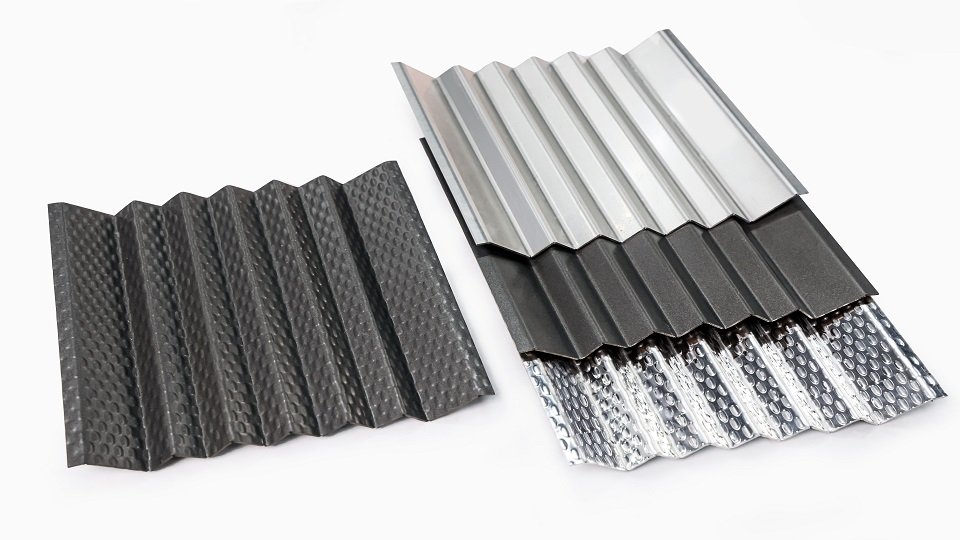
Kênh rung phủ PTFE của máy đếm viên thuốc
In terms of verifying machine materials, certificates are an important part of traceability, but they are not the only way. Manufacturers can also perform spot tests or material identification tests in person. This part is to introduce several methods to test machine materials.
304 stainless steel can be verified through instrumental analysis.
XRF analysis
XRF (X-ray fluorescence) is a much more useful method for actual material identification. The basic principle is that X-rays excite atoms in the material. When the atoms return to their normal state, they emit characteristic X-rays. The instrument analyzes these signals to determine which elements are present and, within the instrument's capabilities and calibration, their concentrations.
It analyzes the alloy's elemental composition, particularly elements such as chromium and nickel, and compares the measured composition with the expected range for the target grade. This allows a manufacturer to identify whether a material is consistent with a 304-type stainless steel rather than relying on appearance or magnetism alone.
XRF is especially practical for incoming-material inspection because it is fast and can be performed with portable equipment. ASTM (American Society for Testing Material) material-identification work likewise recognizes handheld XRF as a practical tool for rapid alloy verification, while noting its limitations for certain lighter elements.
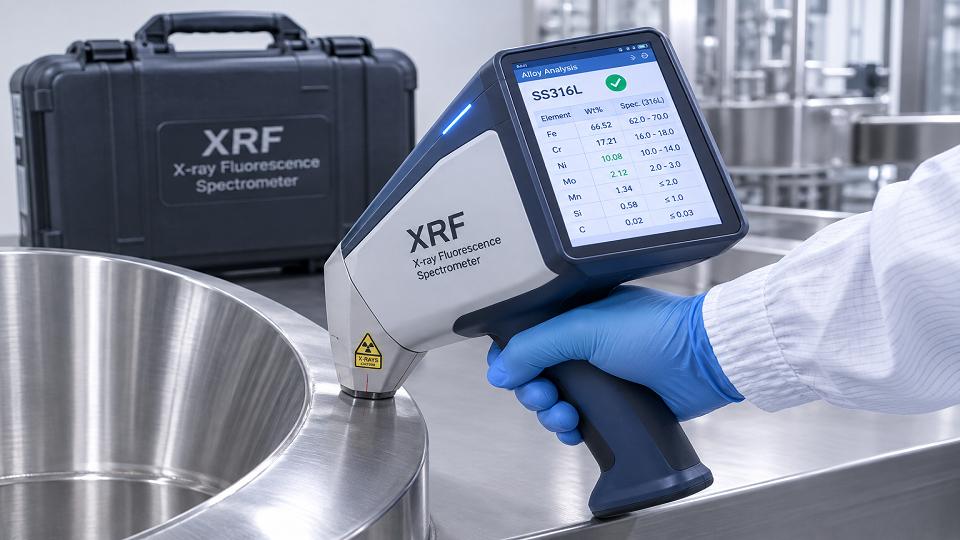
XRF analysis
OES analysis
When a more detailed analysis is required, manufacturers can use OES (Optical Emission Spectroscopy). The basic principle is different from XRF: the metal surface is excited, producing characteristic optical emission lines from the elements present.
Manufacturers can use OES spectrometer to perform the analysis. This can be useful when:
In practice, manufacturers do not necessarily need to use all methods for every 304 component. For routine verification, XRF is often the more practical instrumental test.
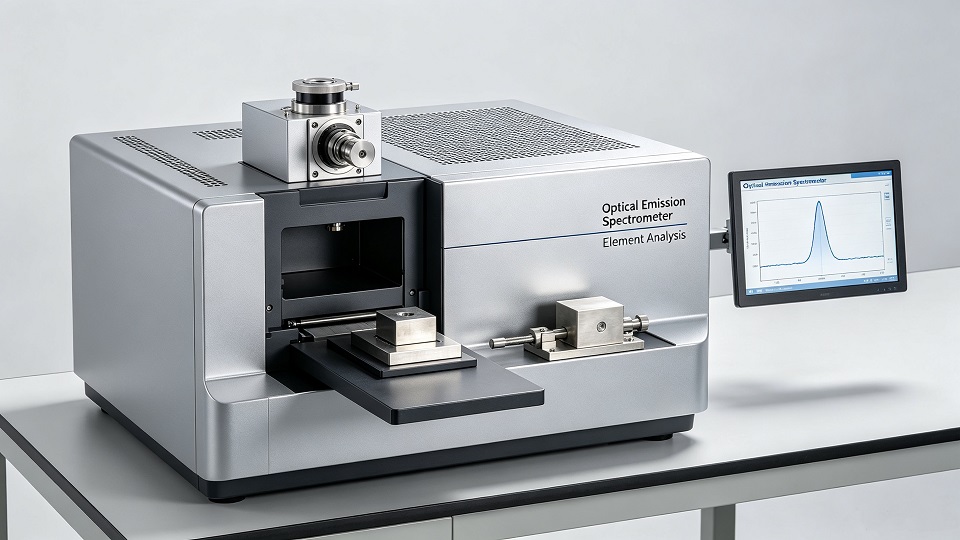
OES spectrometer
316/316L stainless steel requires particular attention because it is often selected for components where higher corrosion resistance is required. The key elemental difference between 304 and 316-series stainless steel is the presence of molybdenum (Mo) at a characteristic level in 316/316L. This makes molybdenum an important indicator when manufacturers want to distinguish 316-series stainless steel from 304.
Molybdenum Test Reagent
One practical method is a molybdenum test reagent, sometimes referred to as a 316 stainless-steel identification solution. It is based on a chemical reaction between the reagent and the machine material. Because 316/316L contains molybdenum, the reagent can produce a characteristic reaction or color change that provides a preliminary indication of whether the material contains molybdenum.
The basic process is: Prepare the surface → Apply the reagent → Observe the reaction → Compare the result → Preliminary identification
This method is attractive for manufacturers because it requires relatively little equipment. It can be useful during incoming-material inspection or for quickly checking a selected machine component.
However, the reagent test is primarily a screening method. It does not provide a complete elemental composition analysis and should not be regarded as sufficient by itself to prove the exact grade or distinguish 316 from 316L.
For critical components, a manufacturer can therefore use the reagent test as an initial check and then perform instrumental analysis if necessary.
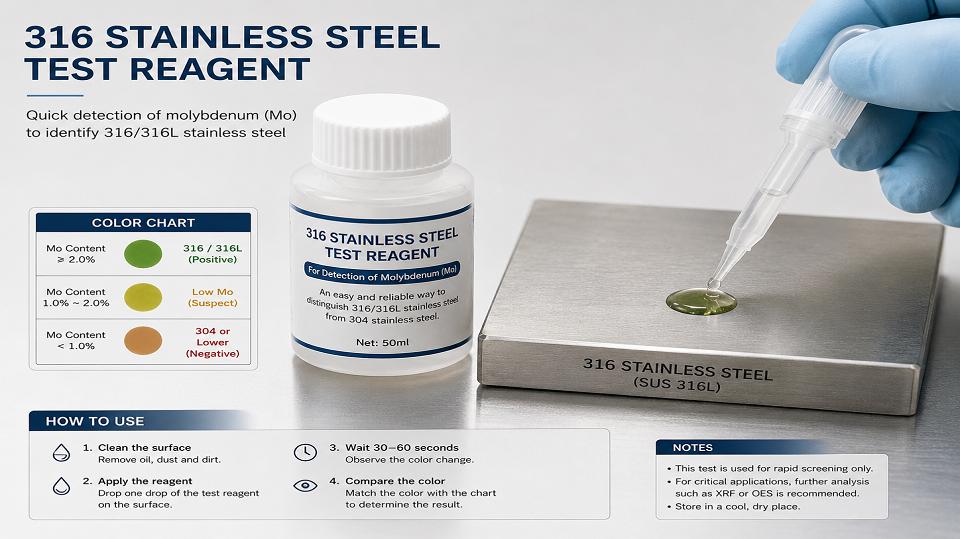
Molybdenum Test Reagent
XRF Analysis
XRF provides a more comprehensive approach to 316/316L identification. Using an XRF spectrometer, manufacturers can analyze elements such as Chromium (Cr), Nickel (Ni), and Molybdenum (Mo). The presence and relative amount of molybdenum are particularly useful when distinguishing 316-series stainless steel from 304.
Another advantage is that XRF testing is generally fast and can often be performed without cutting or destroying the component. Portable XRF instruments can therefore be useful for spot-checking materials on the factory floor.
OES Analysis
For situations where a higher level of material verification is required, manufacturers can use OES. OES can provide a more detailed elemental composition and is particularly useful when elements that are difficult to determine accurately using some portable XRF systems need to be evaluated. This can become important when a manufacturer needs to distinguish 316 from 316L, because the carbon content is one of the key differences between these two grades.
Aluminum alloy presents a different testing challenge because it is not one specific machine material. Different alloys can contain various combination of elements, such as magnesium, copper, zinc, etc.
XRF analysis
XRF can be used to analyze the elemental composition of an aluminum alloy. Depending on the alloy, the manufacturer may examine elements components by comparing the results with the expected composition of the specified alloy.
However, portable XRF systems can have limitations with lighter elements, so the instrument's capabilities and calibration need to be considered when testing aluminum alloys.
Hardness testing
Chemical composition is not the only property that can be checked. A hardness tester can provide additional information about the physical condition of the material.
The basic process is: Apply a controlled force → Create an indentation → Measure the indentation response → Obtain hardness value
Hardness testing does not identify the alloy grade by itself. Instead, it provides a physical-property check that can supplement elemental analysis.
For critical components, manufacturers may therefore combine composition testing with appropriate mechanical-property testing rather than relying on one test alone.
A practical identification method to verify PTFE is FTIR, or Fourier Transform Infrared Spectroscopy. Manufacturer can use FTIR spectrometer to perform the analysis.
The basic principle is that chemical bonds within a material absorb infrared radiation at characteristic frequencies. These can form a characteristic spectrum and then be analyzed with reference spectra. The testing process can be summarized as: PTFE sample → Infrared scanning → Characteristic spectrum → Database comparison → Material identification
FTIR is also widely applicable to other polymers including PE, PP, PVC, etc. Therefore, when a pharmaceutical packaging machine specifies PTFE for an anti-stick component, FTIR provides a practical way to verify the polymer identity rather than relying only on visual inspection or the supplier's documentation.
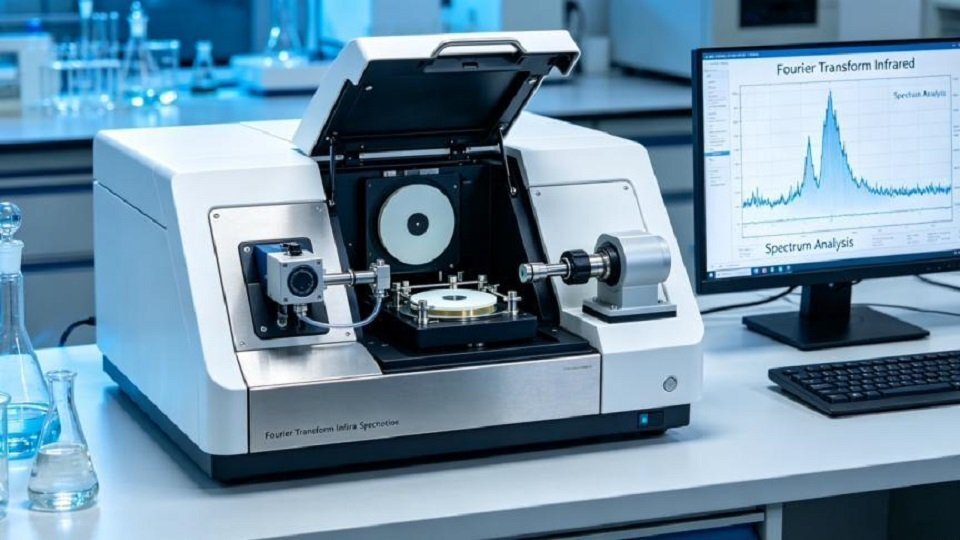
FTIR spectrometer
For a buyer evaluating a pharmaceutical packaging machine, machine material verification should go beyond asking, "Can you provide a material certificate?" The more useful approach is to understand what material is used, where it is used, why it was selected, and how the manufacturer verifies it.
Certificates are an important starting point for verifying the specified grade of machine material. However, buyers should not rely on documentation alone when evaluating critical components of a pharmaceutical packaging machine.
During fabrication, materials may be cut, welded, machined, polished, or assembled, and the buyer ultimately needs to know whether the material actually installed in the machine corresponds to the material specified in the technical documentation.
Therefore, buyers can ask suppliers to provide a material identification and verification process, particularly for product-contact components.
For example, instead of simply asking whether a machine uses stainless steel, buyers can ask the supplier to specify the material used for each critical component. A product-contact hopper may use 316L stainless steel, while the machine frame may use 304 stainless steel. This component-level information provides a much clearer understanding of the machine's material configuration.
Buyers should also ask why a particular material was selected. For example, 316L may be selected for a product-contact part because higher corrosion resistance is required, while PTFE may be selected for a guide because its low friction and non-stick properties are beneficial for product handling.
For critical materials, buyers can also request test records or sample inspection results, where appropriate. This provides additional evidence that material verification is part of the manufacturer's actual quality-control process rather than simply a statement in the machine specification.
In addition to requesting material certificates and material verification records from the supplier, buyers can also conduct on-site machine material checks during the factory inspection.
Before the factory inspection, buyers should identify which components require material verification. Priority should generally be given to product-contact parts and other critical components, rather than attempting to test every individual part of the machine.
For example, if the technical specification states that the product-contact parts of a capsule filling machine are made of 316L stainless steel, the buyer can select representative components such as the powder hopper or dosing components for spot testing through Molybdenum Test Reagent.
Buyers can record the results with the following items:
This creates a direct connection between the technical specification, machine component, and test result.
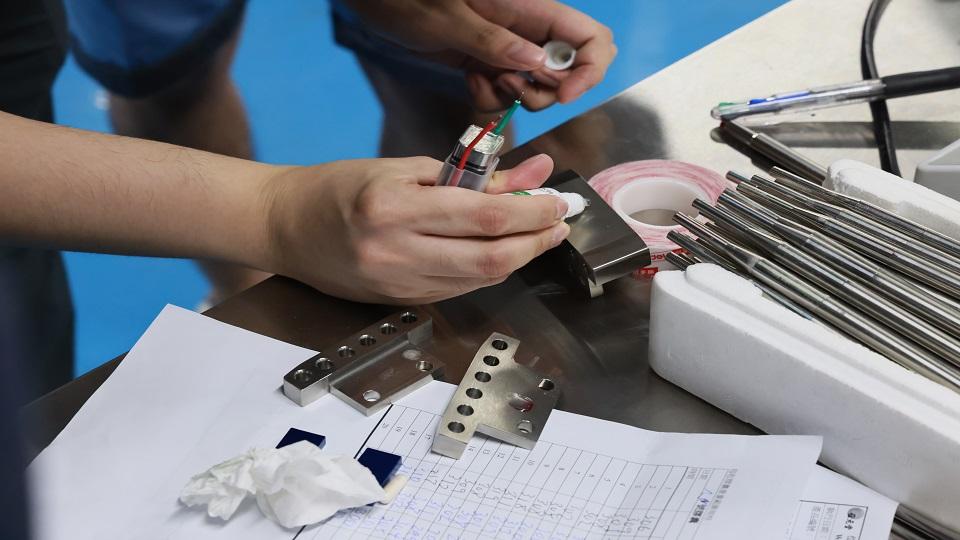
Rich Packing’s Clients is Testing 316 Stainless Steal with Reagent
Machine material selection is a critical consideration in pharmaceutical packaging. The right material can help meet applicable regulatory requirements while providing mechanical performance and product protection required for different machine components.
Các loại vật liệu khác nhau cũng đòi hỏi các phương pháp kiểm định khác nhau. Do đó, đối với người mua, việc kiểm định vật liệu không chỉ dừng lại ở việc kiểm tra xem nhà cung cấp có thể cung cấp chứng nhận vật liệu hay không. Một nhà cung cấp đáng tin cậy cần có quy trình kiểm soát vật liệu rõ ràng và có khả năng cung cấp chứng nhận vật liệu, hồ sơ kiểm tra, kết quả thử nghiệm và các tài liệu kiểm định liên quan khác cho các bộ phận quan trọng. Khi cần thiết, nhà cung cấp cũng nên hỗ trợ việc thử nghiệm hoặc kiểm tra vật liệu tại chỗ trong các chuyến thăm nhà máy và quá trình nghiệm thu máy móc.
Tóm lại, một nhà cung cấp máy đóng gói dược phẩm xuất sắc không chỉ nên cho khách hàng biết những vật liệu nào được sử dụng, mà còn phải cung cấp bằng chứng có thể truy xuất nguồn gốc về việc lựa chọn, thử nghiệm và xác minh vật liệu. Điều này có thể tạo nền tảng vững chắc hơn cho chất lượng thiết bị và sự tin tưởng về mặt quy định.
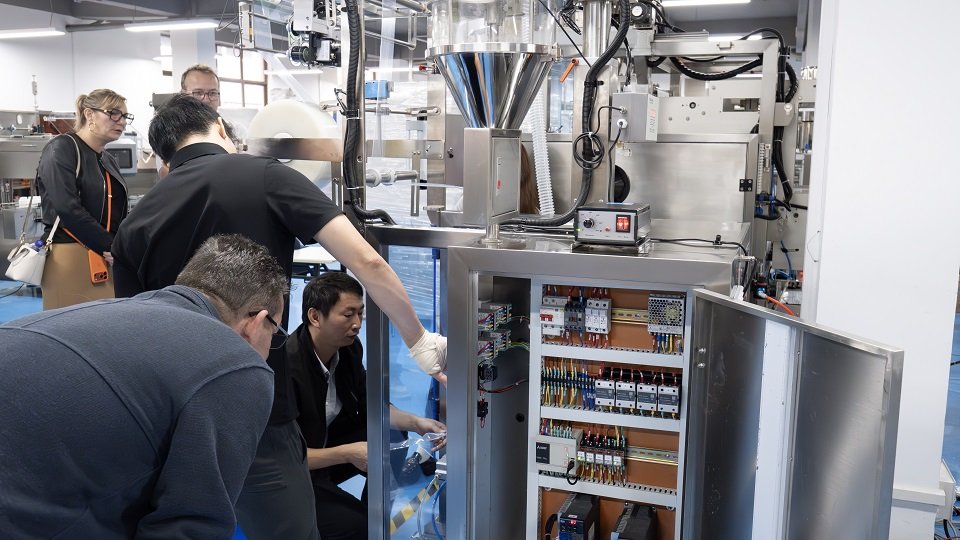
Công ty Rich Packaging xử lý việc kiểm tra của khách hàng một cách chuyên nghiệp.
Thép không gỉ 316/316L có khả năng chống ăn mòn cao hơn so với 304, do đó thường được lựa chọn cho các ứng dụng tiếp xúc trực tiếp với sản phẩm đòi hỏi khắt khe.
Thuốc thử molypden có thể dùng để sàng lọc sơ bộ, trong khi XRF hoặc OES có thể cung cấp thông tin xác minh vật liệu chi tiết hơn.
XRF có thể phân tích các nguyên tố như crom và niken để nhận dạng vật liệu, trong khi OES có thể cung cấp phân tích thành phần hóa học chi tiết hơn.
FTIR (Quang phổ hồng ngoại biến đổi Fourier) có thể xác định PTFE bằng cách phân tích phổ phân tử đặc trưng của nó.
Có. Người mua có thể chọn các linh kiện quan trọng hoặc linh kiện tiếp xúc trực tiếp với sản phẩm để kiểm tra tại chỗ và ghi lại linh kiện, cấp vật liệu cụ thể, phương pháp kiểm tra và kết quả kiểm tra.

29+ years in pharmaceutical machinery, covering capsule filling, tablet pressing, blister packaging, tablet and capsule counting, cartoning, GMP production, and overseas machine service.

E-mail : manager@richpacking.cn
Building D, No. 226, Beishan Qiaotou Street, Haizhu District, Guangzhou City, Guangdong Province, China


 Mạng IPv6 được hỗ trợ